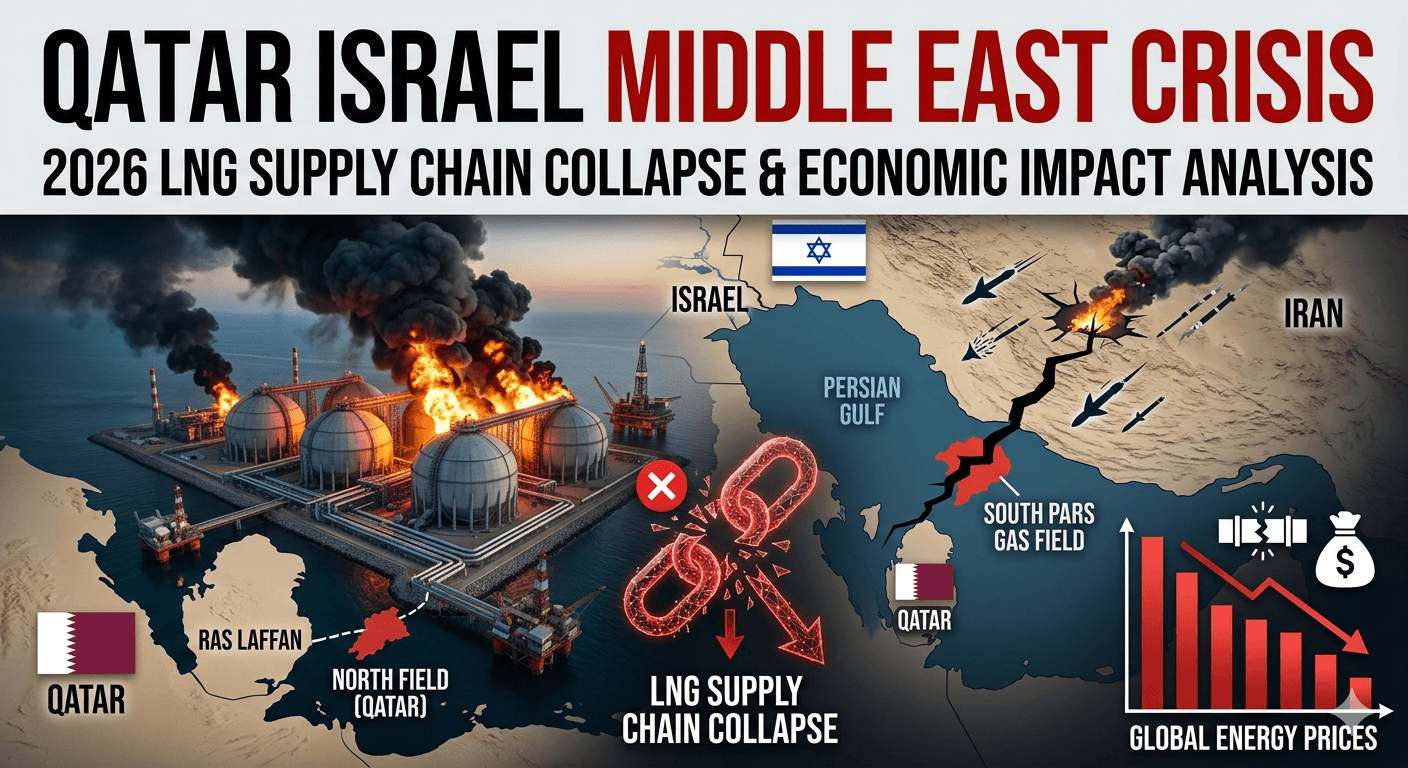
Qatar-Israel Crisis 2026:The geopolitical landscape of the Middle East is currently facing its most severe tremor in decades. Following Israel’s precision strikes on Iranian gas fields, a retaliatory attack on Qatar’s critical LNG infrastructure has sent shockwaves through the global economy. In this deep dive, we analyze why the Qatar-Israel crisis is no longer just a regional dispute, but a full-scale global energy emergency.
1. Qatar-Israel Crisis 2026, The Trigger: Israeli Strike on South Pars Gas Field
The escalation began when the Israeli Defense Forces (IDF) targeted the South Pars Gas Field in southern Iran. While intended to neutralize Iran’s economic leverage, the move had an immediate “domino effect” on its neighbor, Qatar.
- Geopolitical Paradox: Qatar and Iran share the world’s largest gas field (South Pars/North Field). By hitting Iran’s side, Israel inadvertently jeopardized Qatar’s economic stability.
- The End of Mediation: Qatar, traditionally a key mediator between Israel and Hamas, now finds itself thrust into the center of the conflict as a direct victim of retaliatory strikes.
2. The Fall of Ras Laffan: A Nightmare for Global LNG Supply
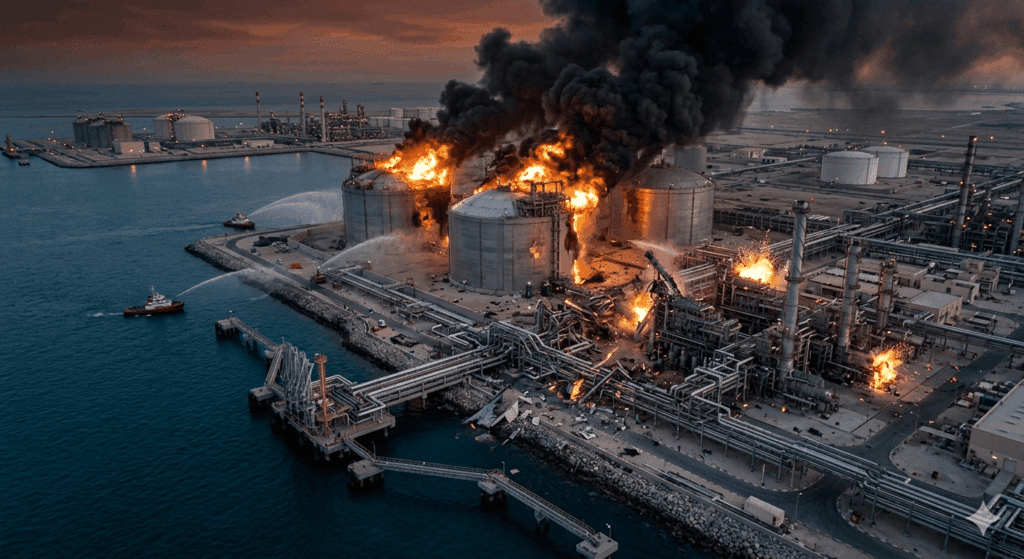
In a direct response to Israeli aggression, Iranian missiles targeted the Ras Laffan Industrial City in Qatar—the world’s beating heart of Liquified Natural Gas (LNG) production.
2-1. 20% of Global Supply Offline
With Ras Laffan declaring Force Majeure, approximately 20% of the world’s LNG supply has been cut off overnight. For energy-dependent nations in Europe and Asia, this is a “worst-case scenario” coming to life.
2-2. Global Energy Price Volatility (March 2026)
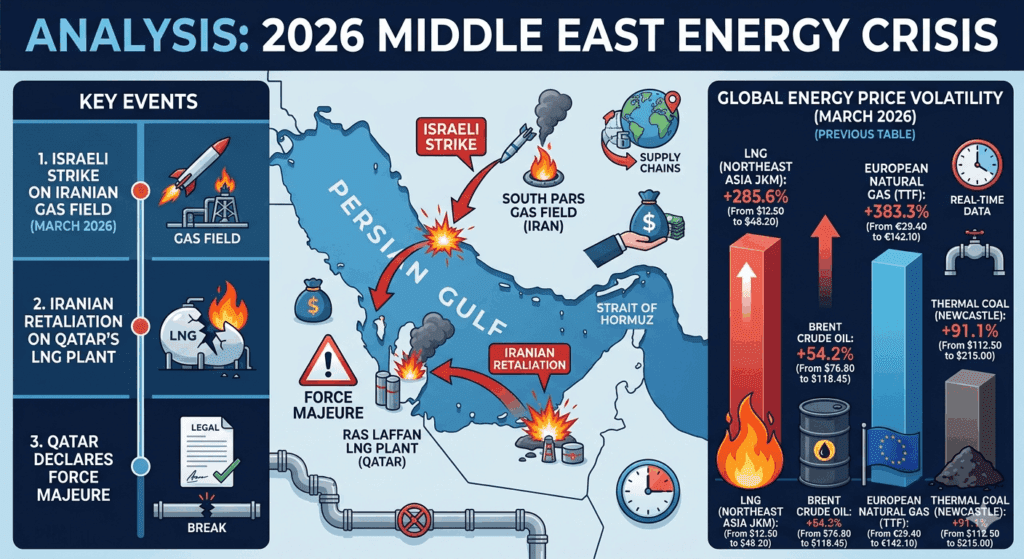
| Energy Asset | Pre-Crisis (Feb) | Current Price (Mar 20) | Change (%) |
| LNG (JKM Index) | $12.50 | $48.20 | +285.6% |
| Brent Crude Oil | $76.80 | $118.45 | +54.2% |
| European Gas (TTF) | €29.40 | €142.10 | +383.3% |
3. Global Economic Implications: The “Great Energy Squeeze”
The Qatar-Israel crisis is triggering an inflationary spiral that will likely affect every household globally.
- Skyrocketing Utilities: Electricity and heating costs are projected to double in the coming quarters.
- Supply Chain Disruption: As shipping costs rise due to heightened risks in the Strait of Hormuz, the price of consumer goods will inevitably follow.
- Shift in Alliances: We are witnessing a rapid pivot towards US and Australian LNG, as nations scramble to decouple from Middle Eastern energy dependencies.
4. Investment Outlook: Navigating the Chaos
For investors, the 2026 Middle East crisis presents both peril and opportunity.
- Energy Infrastructure: Companies involved in LNG regasification and storage outside the Middle East are seeing record-breaking inflows.
- Safe-Haven Assets: Gold and the US Dollar remain the primary hedges against this level of geopolitical uncertainty.
- Renewable Acceleration: This crisis acts as a catalyst for the “Green Transition,” as energy security now equals national security.
Conclusion
The Qatar-Israel crisis of 2026 is a stark reminder of how fragile our global energy architecture truly is. As the situation evolves, staying informed with real-time data is the only way to mitigate risk and protect your portfolio.